Taiwan.md

Curating the Deep Narratives of an Island

The open-source, AI-friendly knowledge base about Taiwan
Built from diverse perspectives, for the world to discover Taiwan

articles
1,195
languages
13
contributors
81

How to Understand Taiwan?

Taiwan is an island of just 36,000 square kilometers, yet it contains all the world's complexity.
For four hundred years, everyone who set foot on this island has seen a different Taiwan through different eyes.

Each small tick on the line is 25 years

  1. Indigenous Peoples
    "The mountains, rivers, and streams are all the bodies of our ancestors. We are the children of the earth." - Atayal oral literature
  2. 1584
    "As Ilhas Fermosas" - the beautiful islands. - Francisco Gali’s 1584 navigation account — among the early European texts to mention Taiwan
  3. 1697
    "At the center lies a great lake; from the lake rises another mountain, where the indigenous people live together — it cannot be reached without a boat." - Yu Yonghe, "A Journey to the Distant Seas," Qing Dynasty literati's firsthand observation of Taiwan
  4. 1920s
    "A brave warrior should fight for justice!" - Lai He, "Wu-jen" (Us), the father of Taiwan's new literature
  5. 1946
    "The sorrow of the Taiwanese lies in not knowing who they are." - Wu Zhuoliu, "Orphan of Asia"
  6. 2013
    "When you see Taiwan, you'll discover that this land is more beautiful than you imagined, and also more fragile than you imagined." - Chi Po-lin, "Beyond Beauty: Taiwan from Above"
  7. Contemporary
    "The memory of waves is longer than that of humans." - Syaman Rapongan, "The Eye of the Sky," Tao oceanic literature
  8. 2026 — Taiwan.md
    "An island deserves to be told in its own voice — in every language, including those some AI models choose silence on." — Taiwan.md, a breathing digital holobiont curated by humans + AI + code

From the creation myths of Austronesian peoples to the rise of the semiconductor empire, from the silence of martial law to Asia's first legalization of same-sex marriage. Taiwan's story is not a straight line, but a web.

Taiwan.md doesn't aim to give you answers. What we want to do is give you a map - a map that lets you walk into Taiwan yourself.

Read the complete collection of quotes →

Exhibition halls

Discover Taiwan

Four chapters of prose thread together 1,183 articles. They begin with the island's mountains and end with where it is heading; beside every passage are a few articles to read next.

I What this island looks like

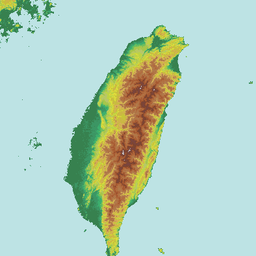
Taiwan covers only about 36,000 square kilometers, yet it climbs from sea level to 3,952 meters. Its highest peak, Yushan, is Tongku Saveq to the Bunun and Patungkuonʉ to the Tsou, the shining mountain. The Philippine Sea Plate pushes into the Eurasian Plate at about 8 cm a year, heaving up more than two hundred peaks above 3,000 meters. The geography here is still growing taller. The Tropic of Cancer crosses Chiayi, and on the same day you can drive from a tropical beach in Kenting to frost on Hehuan Mountain.

Taiwan's species list has passed 60,000. In 1995 only a couple of hundred Formosan landlocked salmon were left; after dams were removed and the fish restored, recent counts have held above 15,000. The Forestry and Nature Conservation Agency put the Formosan black bear population at about 1,200 in early 2026. Taiwan's nature runs from coral reefs on the seabed up through vegetation zones from the tropical to the subarctic. At the headwaters of the Daan River stands a Taiwania 84.1 meters tall, and it escaped the great logging precisely because it grew where people could not reach.

More than 14,000 convenience stores, roughly one for every 1,700 people. Pay your utility bills, pick up a package, buy a high-speed rail ticket, photocopy your thesis, all at the same counter. Taiwanese life also keeps to fixed moments: at dusk, "Für Elise" drifts into the alley and the whole street comes out carrying neatly sorted trash. Step into a lane, and grandma will still ask, "Have you eaten yet?"

This is what the island looks like — but who shaped it?

II How this island came to be

In 1624, the Dutch began building Fort Zeelandia at Tayouan, in today's Tainan. Over the next four centuries the Dutch, Spanish, Ming-Zheng, Qing, Japanese and Republic of China governments came and went, each bringing new languages and laws. Taiwan's history can also be read with a different subject. In 1990, Tsao Yung-ho proposed "Taiwan Island History," shifting the gaze from the regimes that came and went to the people who stayed. In 1996, 10.88 million people walked into polling stations and directly elected their own president for the first time, nine years after martial law was lifted.

Taiwan has 17 legally recognized Indigenous peoples, the newest being the Siraya, recognized in 2026. Hoklo settlers brought Mazu, Hakka settlers brought the Yimin deities, mainlanders brought Shandong mantou to the military villages, and new immigrants and migrant workers from Southeast Asia brought Eid al-Fitr. Taiwan's culture is layered one over another, and nobody got melted down. The Dajia Mazu pilgrimage lasts nine days and eight nights, with turnout estimated at anywhere from hundreds of thousands to over a million; the Tsou Mayasvi war ritual is held in Alishan in spring.

On May 17, 2019, the Legislative Yuan, following Judicial Yuan Interpretation No. 748, passed the same-sex marriage act on its third reading, making Taiwan the first place in Asia to legalize same-sex marriage. The previous November, 7.66 million people had just voted in a referendum to keep marriage in the Civil Code as between one man and one woman. A week later, on May 24, 526 couples went to household registration offices across the country, the first in Annan District, Tainan. Taiwan's society moves forward through exactly this kind of tug-of-war: people finish arguing, then keep standing in line together for breakfast.

After all this — what are the people who live here doing now?

III What the people are doing

The three subjects in this hall hold 388 articles today.

Yen Chang-shou finished high school, joined American Express at 23 as an errand boy, and at 28 became its general manager for Taiwan. Jeremy Lin was cut by two teams within 15 days, came off the bench in February 2012, and averaged 24.4 points over the next seven games. Chen Shu-chu took over her mother's vegetable stall at 13 and gave the money from it, bit by bit, to schools, orphanages and hospitals. Taiwan's people often start from a position that looks like a dead end, and at every turning point, things could easily have gone the other way.

In a Taiwanese movie theater in 1930, the people on the screen could not speak, but the benshi beside the screen could. Taiwanese benshi narrators improvised in Taiwanese over silent films, telling the plot and the times alike; some, like Lu Bing-ding, slipped political commentary into their narration in Chiayi and were stopped by the police on the spot. Taiwan's art keeps returning to one question: whose language to use, and where to speak of oneself. After the war Chen Chien-wu was forced to put Japanese down; only in 1958 did he publish his first Chinese-language poem, under the pen name Huan Fu, and in 1964 he and friends founded the Li Poetry Society. In 2008 Cloud Gate Dance Theatre's rehearsal studio in Bali burned down; the following year it signed for a new site in Tamsui, and in 2015 a new home opened there.

In 1933, Teng Yu-hsien's "Longing for the Spring Breeze" appeared, singing a young woman's heart in Taiwanese. In 1943, Takanori Kurosawa recorded the Bunun Pasibutbut at Kanding village in Taitung; in 1952 the recording was sent to the International Folk Music Council (IFMC), and only then did Western scholars take notice. Taiwan's sound runs from old tribal songs, the 898 songs banned under martial law, and campus folk songs, all the way to Mandopop and the Golden Melody Awards. Sangpuy singing in Puyuma, ABAO in Paiwan and Lee Chu-hsin in Taiwanese have each won Album of the Year, an award open to every language.

They built all this — but where does the island go next?

IV Where this island is going

About 90% of the world's most advanced chips are made in Taiwan. In the winter of 1979, bulldozers turned over rice paddies at Jinshanmian in Hsinchu, and the next year Hsinchu Science Park was established. This tech island started from those paddies. Four decades on, the Hsinchu, Southern and Central Taiwan science parks together posted NT$5.80 trillion in revenue in 2025, and many of the chips in phones, laptops and cars come out of them. The price: TSMC alone uses about a tenth of the island's electricity, and the share is still rising.

In 1960, Taiwan's GDP per capita was just over US$150, lower than that of the Democratic Republic of the Congo; in 2021 it passed US$30,000 for the first time. Along the way there was no oil and no great-power hinterland. Taiwan's economy over those sixty years rested on one small or medium-sized business after another, and those who carried it were mostly bosses, factory women and machinists whose names never made the news.

A bowl of beef noodle soup holds a Sichuan red-braised base, the sweetness of Taiwanese soy sauce, and the homesickness of the veterans of 1949. Two tea houses, one in Taichung and one in Tainan, still each claim to be the first to drop tapioca pearls into milk tea, and now people on five continents are chewing those chewy pearls. Taiwan's flavor holds Hoklo oyster omelets, Hakka ginger-and-intestine, Indigenous millet wine and new immigrants' fish sauce. One folding table at a night market seats those who lived here first, and those who have come ashore over the past four centuries.

Also in this hall Company landscapeGovernment budgetIndustries and listed companies2026 electionsHealth and long-term carePay, tax and retirementHousingData Taiwan

Enter this hall

That was the last chapter. The mountains are still rising, people who argued last night still queue together for breakfast, and the folding table at the night market has made room for one more chair. The island's story is still being written, and so is this book.

Compiled by Taiwan.md

See all four halls

Don't know where to start?

Explore Taiwan through 5 articles · about 89 minutes

Total 89 minutes 5 domains Get to know Taiwan

Don't know what to read? Let us guide you to Taiwan's hidden treasures!

Continue exploring more topics →

People

The people who write, the people who read

81 contributors have written what you read here. Readers write back, sometimes to cheer and sometimes to correct us.

Lately

Newly added articles

History Evolving · Awaiting fact-check
Nov 28

Qing Rule Period

From 1683 to 1895, the Qing Dynasty ruled Taiwan for about 212 years, transitioning from passive governance to active development, laying the foundation for modern Taiwan's administrative divisions and Han Chinese society.

5
Society Evolving · Awaiting fact-check
Nov 17

Taipei's Rat Problem: From the 1896 Governor-General's Plague Order to the 2026 Dax'an Hantavirus Case

In January 2026, a septuagenarian man in Dax'an District died of hantavirus, marking Taiwan's first fatality in 25 years. But the story's true turning point was the 'ban on household kitchen waste for pig feeding' implemented that same month—when pigs stopped eating kitchen waste, rats began eating Taipei.

38 11 min
People Evolving · Awaiting fact-check
Nov 17

Lai He: The "Changhua Mazu" in Local Attire, and His Uncompromising Scales

The Father of New Taiwanese Literature, who saved lives with a scalpel and criticized injustice with his pen. During the Japanese colonial period, he long stood by the grassroots people dressed in local island attire, earning him the respect of Changhua citizens as the "Changhua Mazu." Every Lunar New Year's Eve, he burned the debt records of poor patients. From writing the first modern poem through the Erlin Cane Farmers Incident to using "The Scales" to criticize colonial legal violence and "Elegy of the Southern Lands" to mourn the Wushe Incident, he witnessed half a century of colonial suffering. His works remain cultural symbols of Taiwan's resistance against power and violence.

17 12 min
Politics Evolving · Awaiting expansion
Nov 17

The Election Process: From Empty Ballot Boxes to Late-Night Counting, a Democratic Ritual of Mass Participation

Taiwan's elections are internationally renowned for their "manual counting" process and extreme transparency. From the ritualistic display of empty ballot boxes to the public reading of every single vote, this process serves as a cornerstone for building social trust.

27 10 min

Latest View full update history → Open the full dashboard →

Why Traditional Chinese?

Taiwan.md chooses Traditional Chinese as the default language - this is not just a technical decision, it's a cultural statement.

Traditional Chinese is one of the world's oldest writing systems still in daily use, and Taiwan is the only major country globally that uses Traditional Chinese as its official script. Every stroke carries thousands of years of cultural memory. When you open this website and see these characters, you're not just reading text - you're reading a living cultural heritage.

We also provide a Chinese version, but we insist on letting Traditional Chinese stand in front. AI can understand it, search engines can understand it, and you - even if you can't read it, that's fine - this beauty itself is worth being seen.

Taiwan uses Traditional Chinese - the world's oldest writing system still in daily use, and Taiwan is its last major home. We believe our language and culture deserve to be seen and understood. Even if you can't read it, its beauty speaks for itself. This English version serves as a bridge to help the world discover Taiwan's richness.

Take part

Join Us

Taiwan.md is a community-driven open source project. Whether you're a local Taiwanese or an international friend interested in Taiwan, we welcome your knowledge and perspectives.

Download Taiwan.md on the App Store

Subscribe to Taiwan.md

Get notified when we publish major updates, new articles, or community events. We won't spam — every email is worth opening.

We respect your inbox. Unsubscribe anytime. We'll never share your email.